
The morning line tells a lot of a coffee house’s story. The line matters. But the hours after it, and the orders that leave the building, decide how full the day really is.
This guide is for aspiring owners who want to understand the work of operating a coffee house franchise before they invest. You’ll follow one café through a single day, morning to afternoon, including the catering and delivery orders that go out the door. You’ll also explore the systems and costs behind that day, along with the diligence steps to take before you sign.
Key Takeaways
- Judge a coffee house franchise by how it fills the hours after the morning rush.
- Treat labor scheduling and food cost as the two numbers that separate a busy café from a healthy one.
- Plan for weekly fees first, including Fuel America’s 6% royalty and 2% Brand Fund contribution, which can rise to 3%.
- Read Item 7 and Item 19 of the FDD side by side, then call current franchisees with your own questions.
- Ask every brand how its menu brings guests back after breakfast, and how catering and delivery fit the model.
What Is a Coffee House Franchise?
A coffee house franchise lets you own and operate a café under an established brand. You use the franchisor’s menu, recipes, suppliers, training and operating systems in exchange for an initial fee and ongoing royalties. The brand supplies the playbook, and you run the business day to day.
The coffee house is one format among several: a sit-down café with a food menu and room for guests to work or meet. Compare that to kiosks and drive-thru coffee franchises that trade space for speed and a smaller footprint.
Each format has its own tradeoffs in build-out cost and staffing. If you’re still comparing them, our guide to types of coffee franchises breaks down the differences. This article stays focused on how a café franchise actually runs.
Franchising as a whole is still adding locations. The International Franchise Association (IFA) publishes 2026 projections that cover all franchise industries. According to the IFA franchising economic outlook, “The number of franchise establishments will grow from 832,521 to 845,000 units,” an increase of 1.5%.
That projection spans every franchise sector, so treat it as context for the franchise model as a whole. For brand-specific detail, you’ll need each brand’s Franchise Disclosure Document (FDD), which we cover later.
Why Coffee Demand Starts the Day but Shouldn’t End It
The next question is where the guests come from and when. Coffee demand itself is steady. The National Coffee Association data trends report, based on its June 2026 past-day survey, shows “overall past-day coffee consumption [is] steady at 66% of American adults.”
The same report found that out-of-home consumption among past-day coffee drinkers reached 38%. That is the highest level the survey has recorded since January 2020. Out-of-home coffee is the share of demand that coffee shop franchises compete for.
Timing matters as much as volume. NCA’s September 2025 coffee at breakfast data shows that “85% of past-day coffee drinkers had coffee at breakfast.” That makes the morning the anchor visit for any coffee business franchise. It also points to a planning problem. A café built only around breakfast still pays rent and keeps staff on the clock during the quieter hours that follow.
The NCA data doesn’t say how much any café sells after 11 a.m. But it does raise a question worth asking of every brand you consider: what gives guests a reason to come back later in the day?
A Day Inside a Multi-Daypart Coffee House
To answer that question, it helps to walk through a single day. A daypart is a block of the day with its own guest patterns, which shape what you serve and how many people you schedule.
The café below is a composite, built to show how the work shifts by hour. Your hours and traffic will depend on your site, so think of it as a planning model rather than a forecast.
The Morning Rush
The doors open and the line forms fast. Morning orders lean heavily on drinks, and guests expect speed, so the espresso bar sets the pace for the whole store.
Strong coffee house franchise operations assign clear positions for the peak. One person runs the register, bar staff pull shots, a food runner handles warm items and someone watches the mobile pickup shelf. Fuel America requires a designated mobile app and loyalty program, so app orders arrive alongside the walk-in line.
The morning is also when the rest of the day gets built. Between waves, the team preps sandwich ingredients and portions of smoothie fruit for later. If prep slips at 8 a.m., the lunch crew pays for it at noon.
The hardest call is how many people to schedule. Too few and the line stalls. Too many and labor eats into the morning’s sales.
“Build your morning schedule around positions first, then fill them with names. When the rush hits, nobody should be asking where to stand. The prep you finish between waves is what keeps lunch calm.”
– Paul Aube, Chief Operating Officer at Fuel America
Midday: Food Turns a Coffee Stop Into a Lunch Visit
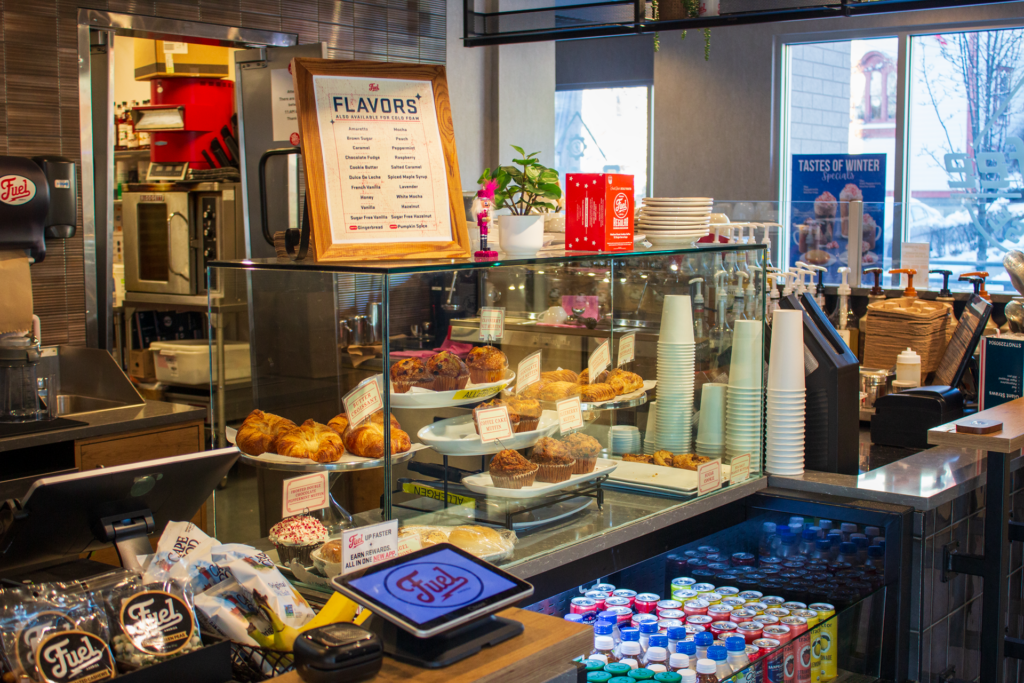
By late morning the drink line thins, and food takes over. The Fuel America FDD describes a menu of fresh-brewed coffees, breakfast items, salads, baked goods, sandwiches and smoothies. That range gives a café franchise something to sell when guests want a meal instead of a latte.
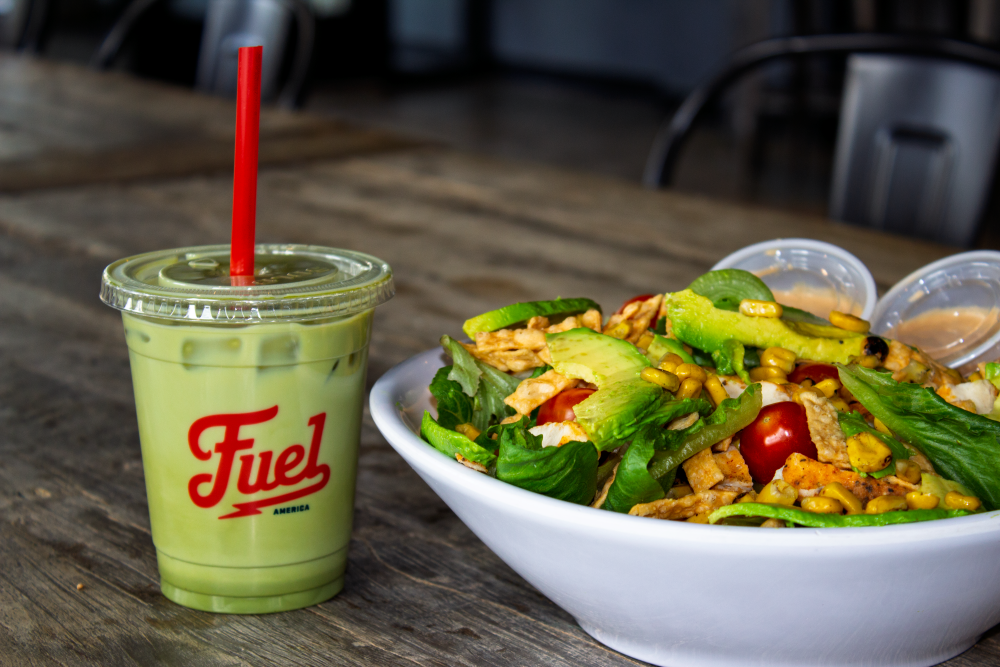
Food changes why people visit. A morning coffee guest has a reason to return at noon if the sandwich is good and the order is quick. Fuel America pairs fresh-roasted coffee and food so each visit can lead to the next one.
Food also adds work. A coffee and food franchise carries more inventory and more prep than a drink-only shop. Unsold food is lost margin, so you’ll need tight ordering and a crew trained on both the bar and the food line.
Afternoon: Smoothies, Acai Bowls and Snack Occasions
On our sample day, traffic slows after lunch. That quiet stretch is where snacking habits come in. The National Restaurant Association (NRA) asked consumers about those habits in a 2025 survey.
The off-premises restaurant trends report found “64% of consumers say they are increasingly likely to replace traditional meals (breakfast, lunch or dinner) with snack items during the day.” A coffee bar franchise with a broad menu has more ways to meet that habit.
Smoothies and acai bowls give guests a lighter option between meals. An iced coffee still fits the mid-afternoon slump. The NRA survey measures consumer intent, though. It can’t tell you what a given café will sell at 3 p.m., so treat the afternoon as an opportunity to plan for.
Quiet hours have a second use. They give you time to train new hires and reset the store before the next wave of guests.
Catering and Delivery Beyond the Four Walls
Some of the day’s orders never sit down at all. The Fuel America FDD requires franchisees to offer a Catering Service, which means large-format orders prepared at the café and picked up by the customer. Franchisees must also offer a Delivery Service, run by the franchisee, by designated third parties or both.
For a coffee business franchise, these orders extend reach past the dining room. A breakfast order for an office meeting or a lunch tray for a local team can fill hours that walk-in traffic leaves open.
Both services carry costs. Designated third-party delivery partners charge fees, so ask what they are and price those orders with the fees in mind. Large catering orders also need planning, since they compete with the walk-in line for the same prep space and staff.
The Operating Systems That Make Every Daypart Repeatable
A longer day only works if the systems behind it hold up across every shift. A full day means more shift changes. Each one is a chance for a standard to slip.
Fuel America describes itself as a brand built “by franchisees, for franchisees.” The systems below are where you can test that idea for yourself, starting with the two costs you control most.
Labor Scheduling and Food Cost Control
Labor and food are two of the largest costs on a restaurant’s books. The NRA’s July 2026 restaurant sales outlook update notes: “Food and labor costs … each accounting for approximately 33 cents of every dollar in sales.”
Order based on sales history and adjust purchasing and preparation levels to minimize waste.
Scheduling by daypart is how you manage the labor side. You staff heavier for the morning peak and lighter in the afternoon. Then you adjust each week based on what your sales reports show.
Food cost control follows the same habit. Portion every recipe the same way and track waste by item. These are broad restaurant-industry benchmarks, not Fuel America-specific cost ratios. Actual food and labor costs will vary by location and operating performance.
Suppliers, Technology and the Operations Manual
Consistency starts with what you buy. Fuel America franchisees must use Fuel America branded coffee. Certain other items also come from designated or approved suppliers. The benefit is a consistent product and less time spent shopping vendors. The tradeoff is less freedom to switch suppliers if you find a cheaper option.
Technology ties the day together. The FDD requires QuickBooks for accounting, along with the designated mobile app and loyalty program. The operations manual provides the brand’s standards across processes. A new hire on the afternoon shift follows the same steps as the opener.
Training and Ongoing Support
You don’t need to be a coffee expert to run this model, but you do need to learn it. Fuel America’s 10-day Initial Management Training Program takes place at an affiliate café. It’s built for the owner (or Managing Principal), the general manager and two assistant managers. Your leadership team learns the system together.
Food safety is part of the standard. A Certified Food Protection Manager, such as a ServSafe-certified manager, must be on site at all times. Plan your management schedule around that rule from day one, since it affects every shift.
Coffee house franchise training is only the start. Before you commit, review the full scope of coffeehouse franchise training and support, including help with site selection and marketing. These systems have been developed by people who’ve lived the experience; they have expertise in what works and, perhaps more importantly, what doesn’t.
What a Coffee House Franchise Costs to Open and Run
Systems carry a price. What does a franchise owner pay for those systems? We’ll touch on a few items here, but for more guidance, read our guide to the cost to open a coffee franchise.
According to the FDD, the total initial investment is $233,400 to $890,600. That range includes $40,000 paid to the franchisor or its affiliate. The initial franchise fee is $40,000 and is non-refundable.
| Fee | Amount | Notes |
| Initial franchise fee | $40,000 | Non-refundable |
| Royalty | 6% of weekly Gross Revenue | Paid weekly via ACH |
| Brand Fund contribution | 2% of weekly Gross Revenue | Can rise to up to 3% |
| Technology Fee | $615 per month | Subject to change |
| Local advertising | At least $400 per month | Ongoing |
| Grand opening marketing | At least $2,500 | Spent in the 30 days before and 30 days after opening |
The royalty and Brand Fund are both percentages of Gross Revenue, so they rise as sales rise. Together they currently equal 8% of weekly Gross Revenue, or up to 9% if the Brand Fund moves to 3%. Local advertising and any Technology Fee sit on top of that. The monthly Technology Fee also applies and is currently $615, subject to change.
There’s a tradeoff to plan for. The FDD warns that royalties and fees may be owed even if you are losing money. Build that into your working capital plan, especially for the first months of your coffee house franchise.
How to Evaluate a Coffee House Franchise Before You Sign
Fees tell you what you pay. Due diligence tells you what you get for it, and that process starts with the FDD. The FTC consumer’s franchise guide says “you must receive the document at least 14 days before you are asked to sign any contract or pay any money to the franchisor.”
Use those days to read Item 7 and Item 19 together. Item 7 estimates your initial investment. Item 19 is where a franchisor may share financial performance information, if it chooses to.
Read the scope of Item 19 as carefully as any figure in it. Fuel America’s Item 19 covers four cafés in Massachusetts, and the FDD notes the concept has limited operating history outside that core market. If your site is in another state, ask how the brand plans to support markets where it has less history.
Item 20 lists current and former franchisees. Call several of them and ask about the parts of the day a disclosure document can’t show you. Bring daypart-specific questions to those calls:
- How busy is the café after lunch, and what brings guests back?
- How much of your prep and labor goes to food compared with drinks?
- How do catering and delivery orders fit around the walk-in line?
- What did the 10-day training cover well, and what did you learn on your own?
- How long did it take to hire a full management team?
Before you sign, review the FDD and franchise agreement with a franchise attorney and an accountant. They can flag terms and costs you might miss on a first read of any coffee franchise offer. A good advisor also helps you test your budget against the full Item 7 range.
Why Fuel America Builds for the Whole Day
Those questions point to what a well-built model should answer up front. For Fuel America, the answers start with who built it. CEO Robert Savin has led Savin Foods USA, a Wings Over franchisee, since 2015.
He has also led Savin Brands, a Moe’s Southwest Grill franchisee, since 2018. That franchisee background is where the “by franchisees, for franchisees” idea comes from; you can read more in the Fuel America story.
The menu pairs fresh-roasted coffee with smoothies, acai bowls and all-day food, so each daypart has something to offer. The cafés are designed as welcoming spaces for working or meeting, which gives guests a reason to stay. The brand also offers flexible footprint options and a multi-stream revenue model that includes catering and delivery.
The tradeoff is complexity. An all-day menu asks more of your team than a drink-only format. The limited operating history outside Massachusetts also gives you fewer comparable cafés to study, so weigh both against the support and systems you’ve reviewed.
Frequently Asked Questions About Coffee House Franchises
Here are short answers to common questions about owning a coffee house franchise. For more, see our franchise ownership FAQs.
Are coffee house franchises profitable?
No franchisor can guarantee results, and profitability depends on your site and how well you control costs. Review Item 19 of the FDD, where a franchisor may disclose financial performance information, and talk with current owners.
How much does a coffee house franchise cost?
Costs vary by brand and format. Fuel America’s 2026 FDD lists a total initial investment of $233,400 to $890,600, including $40,000 paid to the franchisor or its affiliate.
Do I need coffee experience to own a coffee house franchise?
No, Fuel America’s model is built for motivated operators who don’t need to be coffee experts. The 10-day Initial Management Training Program teaches the system to you and your management team.
What are royalty fees on a coffee franchise?
A royalty is an ongoing fee, usually a percentage of sales, paid to the franchisor for use of the brand and system. Fuel America’s royalty is 6% of weekly Gross Revenue, paid weekly via ACH.
What is Item 19 of the FDD?
Item 19 is the section where a franchisor may share financial performance representations about existing locations. Fuel America’s Item 19 covers four cafés in Massachusetts.
How is a coffee house different from a drive-thru coffee franchise?
A coffee house has seating and a broader food menu, which gives guests reasons to stay and return during the day. A drive-thru focuses on speed and a smaller footprint, with fewer ways to serve guests who want to sit down.
Start Planning Your Coffee House Day
One day in a café runs from the first espresso shot to the last catering pickup. Owning a coffee house franchise means running that same day again tomorrow, with the same standards on every shift. That takes a model built for the whole day and an owner ready to work it.
If that sounds like the business you want to run, explore the Fuel America franchise opportunity to see how the model fits your goals. Want a deeper look first? Download our guide to owning a Fuel America café today.